In Cushing’s disease, mitotane alone in high doses (4 to 12 g/day) can achieve remission in as many as 83% of patients, but more commonly, it is used in lower doses (0.5 to 4 g/day), sometimes in combination with radiation therapy, with clinical and biochemical remission achieved in approximately 80%. At these doses, the onset of effect can take approximately 6 to 8 weeks, and additional adjunctive medical treatment may be needed in this interim. Similarly, the agent has a long half-life (18 to 159 days), due in part to its lipophilic properties, and its effects can last for weeks to months after discontinuation of therapy. Mitotane, alone or in combination with metyrapone or aminoglutethimide, also has proved useful as treatment for hypercortisolism associated with ectopic secretion of ACTH.
Any dog can develop Cushing’s disease, but it is more commonly diagnosed in these breeds:
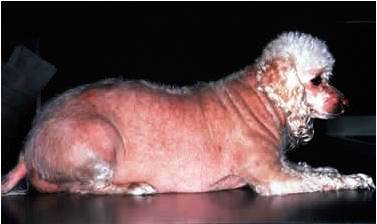
Poodles, especially Miniature Poodles
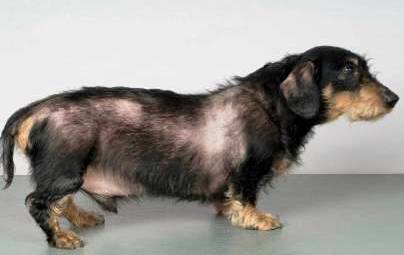
Dachshunds
Boxers
Boston Terriers
Yorkshire Terriers
American Staffordshire Terriers
Symptoms
There are a variety of symptoms that can appear in a dog with Cushing’s disease. Some of the most common signs include:
Drinking more water
Increased urination
Increased appetite
Hair loss or poor regrowth
Panting,
Pot-belly appearance
Thin skin,
Blackheads (called calcinosis cutis)
Recurrent skin infections
Recurrent urinary infections
Sudden blindness
Lethargy
Urinary incontinence
Seborrhea or oily skin
Firm, irregular plaques on skin
How Is Cushing's Disease Diagnosed in Dogs?
Although there is no single test that will diagnose 100% of cases, your veterinarian will likely recommend some combination of the following:
Baseline bloodwork (CBC/Chemistry)
Urinalysis +/- urine culture (to rule out urinary tract infections)
ACTH stimulation test (can have false negatives)
Low-dose dexamethasone suppression test (can be affected by other illnesses)
High-dose dexamethasone suppression test
Urine cortisol to creatinine ratio
Abdominal ultrasound(can identify changes in liver and adrenal gland enlargement or tumors)
Computerized tomography scan or magnetic resonance imaging of the brain (can detect pituitary tumors)
What’s the Treatment for Cushing’s Disease in Dogs?
Treating Cushing’s disease in dogs is largely dependent on the underlying cause. Treatment options include
Surgery
Adrenal tumors can often be surgically removed
Medication
Medical management with either trilostane(Vetoryl®) or mitotane (MITOSAFE®)is the most common form of treatment for pituitary tumors and when surgery isn’t an option for an adrenal tumor.
While starting medication or changing dosages, please be sure to monitor your pet for lethargy, vomiting, decreased appetite, or trouble breathing. Call your veterinarian immediately if any of these signs are noted.
Radiation
Radiation treatment for pituitary-dependent Cushing’s disease in dogs has been shown to improve or eliminate neurological symptoms and improve the prognosis, especially when treated early. The median survival time in these cases is 743 days, or about two years. Radiation therapy may also be an option for adrenal tumors that cannot be surgically removed.